A welcome step forward for business users, and a clear case for bringing OpenAI dots into CarPlay.
I was excited to finally use ChatGPT through the CarPlay app. On a two-hour road trip to the city, I had the chance to see how well it fitted the way I work. I wanted to talk through business questions, clarify decisions and prepare work I could review later.
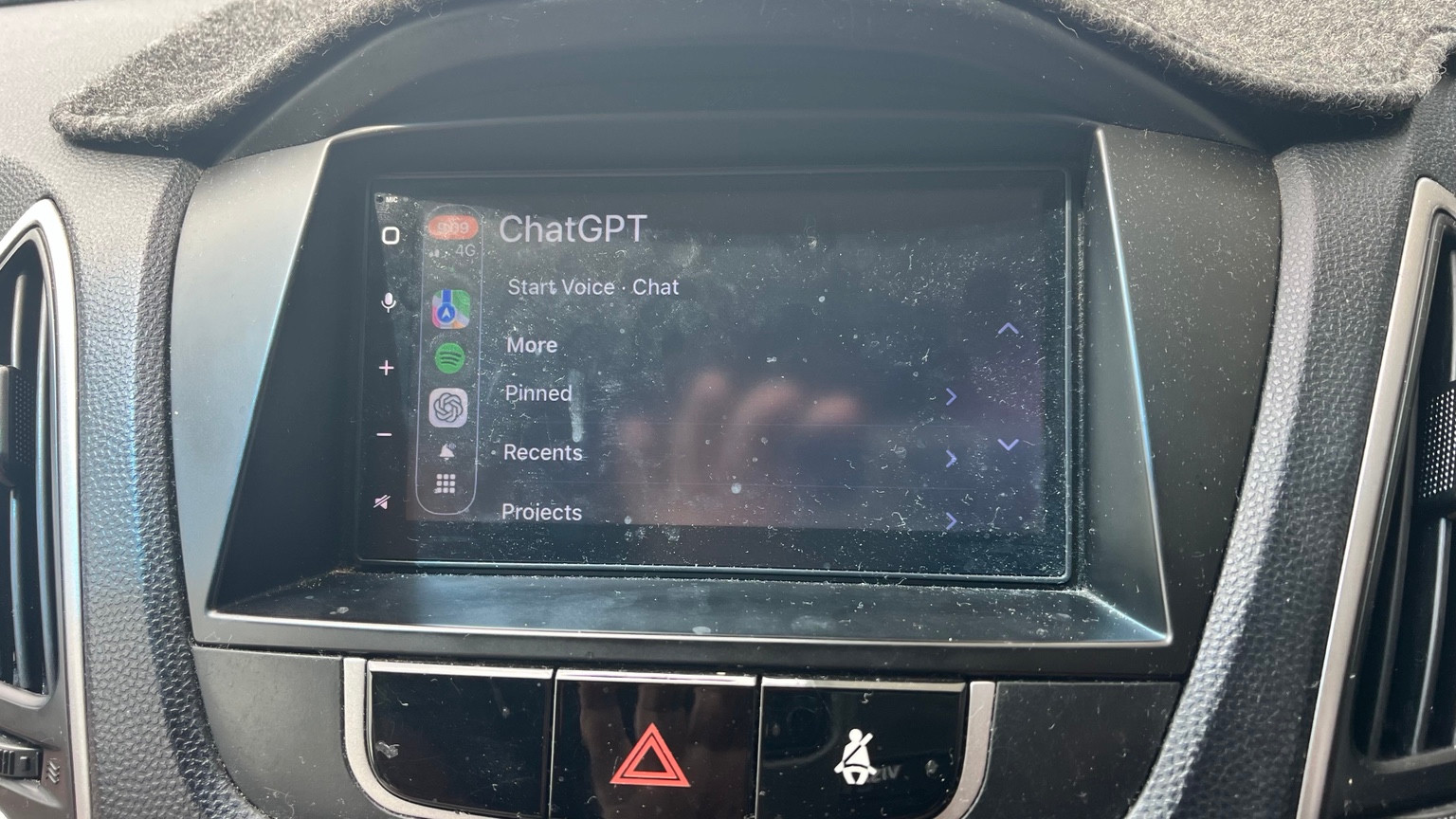
Having ChatGPT available directly through the car’s interface was something I’d been looking forward to. Voice is a practical way to discuss an idea or explain a problem, and CarPlay makes that conversation easier to access. For someone who regularly uses AI in their business, that is a useful development.
The road comes first. Setup, screen checks, approvals and discussions that need serious concentration belong safely parked. Hands-free conversation still takes attention and needs to stop when it competes with driving.
ChatGPT in CarPlay lets you start a voice conversation or continue a recent chat or project. I found it useful for exploring ideas, asking follow-up questions and working towards a clearer understanding of what needed to happen next.
The limits became apparent when I tried to move from discussion to action. An email request asked me to approve the action on screen, but I couldn’t find the approval control in CarPlay. When safely parked, I checked my iPhone and still couldn’t find the prompt. The email remained unsent.
OpenAI’s CarPlay guidance says the interface cannot act on other apps, including Mail and Slack. That is an important boundary for business users. Being able to discuss a task in the car does not mean the CarPlay experience can carry it out.
This is where my experience with Astrix became relevant.
Astrix is my OpenAI dot, the personal agent I use within ChatGPT. OpenAI describes dots as agents that can take on ongoing work and keep making progress between conversations. They can use connected apps within the access and permissions you provide.
I’d already connected relevant work apps to Astrix, and she had some of my project context. While parked, I opened Astrix on my iPhone and continued the conversation through CarPlay’s audio. Astrix was running on the phone. I wasn’t launching my dot directly from the CarPlay app.
The practical difference was that I could pick up work already underway with less background to explain. I could also move on to another question while Astrix continued working on an earlier task. That suited a morning with several separate business matters to work through.
For me, these were two useful experiences within ChatGPT. The CarPlay app gave me convenient access to a voice conversation. My dot brought the project context, connected tools and ongoing work I had already established with her. I wanted that same working relationship available directly through CarPlay.
One example from the trip was a customer support offer. Talking it through brought us to the decision underneath the proposal. What could our team reliably promise? We settled on business-hours support and a next-business-day initial response as the basis for a draft. The offer still needed technical confirmation and review, but the commitment we were proposing was clearer.
That is the business value I see in this way of working. A task such as finishing a proposal often depends on decisions that have not yet been made. A useful conversation can identify those decisions, test the assumptions and produce a better starting point for the document.
I still needed to correct misunderstandings, check the work and approve actions where required. By the end of the trip, I had clearer next steps and useful drafts to review. That was worthwhile progress.
To be honest, now that I have Astrix, I could do without standard ChatGPT Voice altogether. I want to speak with her and pick up the work we already have underway. I just want her accessible through CarPlay while I’m driving.
That is the next step I want from OpenAI, native support for dots in CarPlay. Let me open Astrix directly from the car’s interface.
That experience should carry forward relevant project context and let me ask for a brief update on work in progress. Which drafts are ready? What is still being worked on? What needs my input? Concise spoken updates would make it easier to stay informed without needing to inspect a screen.
It also needs a clear way to handle anything that cannot be completed by voice. If a task requires a document review, a screen interaction or a detailed approval, the assistant should explain that and leave it ready for when I’m safely parked. The user should know what has been completed, what is waiting and what to do next.
For business owners who already work with a dot, direct access would reduce the need to switch between interfaces and repeat instructions. It would make CarPlay a more practical way to stay connected to work already in progress.
I’m pleased OpenAI has brought ChatGPT into CarPlay. After two hours on the road, I could see both its immediate value and the next opportunity. Bring OpenAI dots into CarPlay, with the context, continuity and clear controls that business users need.
Or maybe I should just vibe-code a better app myself. Lol.